
More Than Just Water
by Natalie Wolfeiler, Development Intern. 2026.
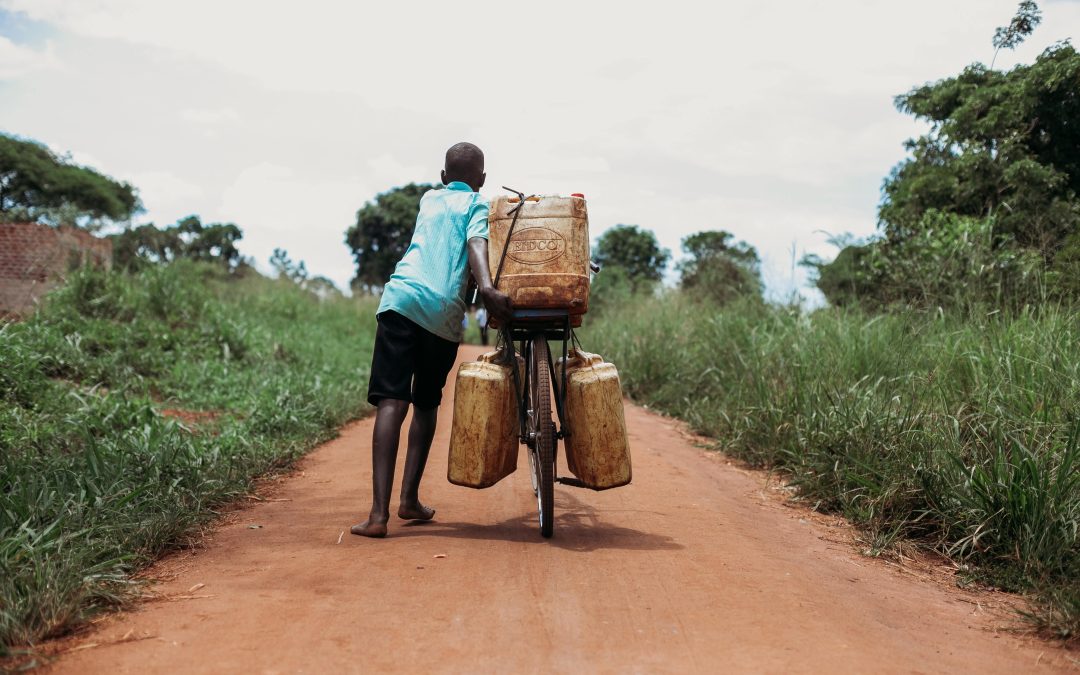
Across Uganda, many mornings begin differently. Before sunrise, mothers and children are already on their way. Not to work. Not to school. To collect water.
For many communities in Uganda, the nearest water source can be 2 to 4 miles away. That’s hours spent walking each day, often carrying 40-pound jerrycans home. And after all of that effort, the water they collect may still be unsafe to drink, coming from swamps or old wells, contaminated with bacteria and disease. That’s the water crisis in its simplest form. But the true cost goes far beyond the walk.
Water Changes Everything
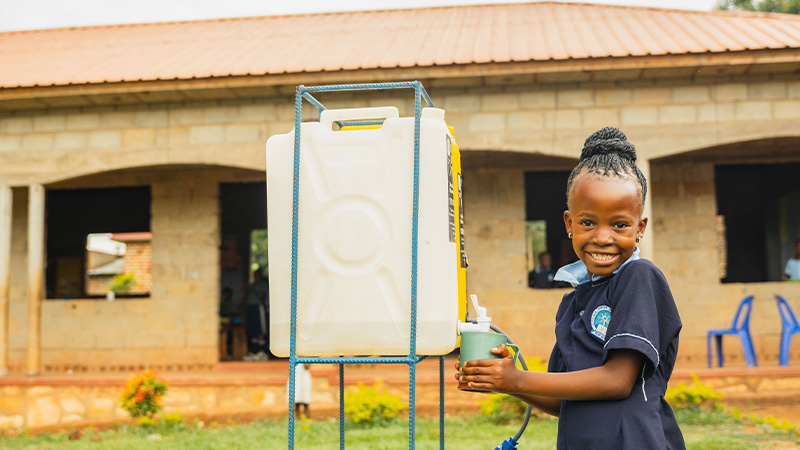
When most people think about the global water crisis, they think about one problem: a lack of drinking water. But that barely scratches the surface. In reality, water touches nearly every part of daily life.
It affects whether children can attend school, whether parents can earn an income, whether families can stay healthy, whether hospitals can safely deliver babies, and whether communities can grow and thrive. Access to clean water influences education, healthcare, economic opportunity, and dignity.
For many of us, water is something we rarely think about. We turn on the tap, fill a glass, wash our hands, and move on with our day. But when clean water isn’t nearby, or isn’t safe to drink, every part of life becomes more difficult.
That’s why solving the water crisis means more than drilling wells. An essential first step. It means creating reliable, sustainable systems that improve health, strengthen communities, and give families the opportunity to thrive.
Here’s how Ugandan Water Project is making that happen.
Rainwater Collection Systems - Water Right Outside the Door
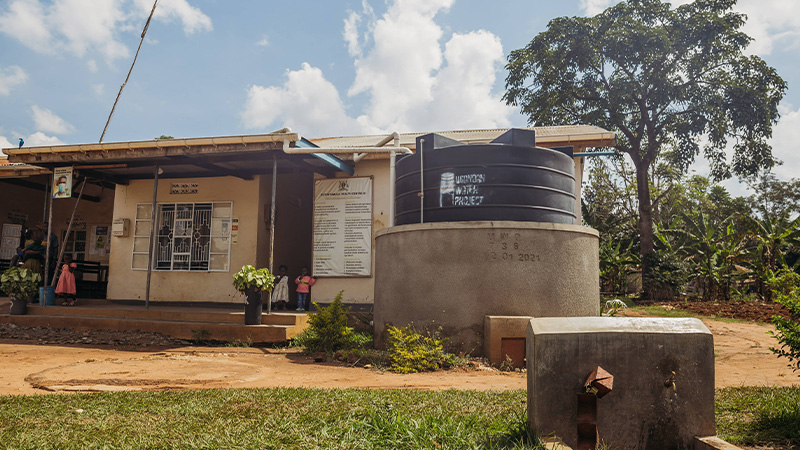
These 10,000-liter tanks connect to a building’s roof and collect and store water when it rains. Instead of walking miles to the nearest water source, people can collect water just steps away and purify it using filters before drinking.
For many schools and health centers, that convenience is life changing. Without a reliable water source on-site, schools often rely on students to fetch water, costing them valuable time in the classroom. At health centers, limited water must be reserved for patient care, leaving little for cleaning, sanitation, and hygiene, all of which are essential for preventing the spread of disease.
And the journey to collect water is about much more than the time it takes. People often carry heavy 40-pound jerrycans for miles over steep, muddy terrain. The repeated strain can lead to chronic neck, back, and chest pain, while children risk affecting their physical development from carrying heavy loads at a young age. Long walks to isolated water sources also leave women and children vulnerable to harassment and violence. Rainwater collection systems help eliminate those risks by bringing water directly to where people need it most.
For health centers, the impact can be transformational. With reliable water available on-site, staff can regularly clean maternity wards, sterilize equipment, improve infection prevention, and provide safer, higher-quality care for every patient.
At St. Denis Kyango Health Center III, Director Muwonge Innocent shared that after receiving a rainwater collection system, “our patients now have confidence and pride in our health centre because of the presence of this water tank.” They are able to “demonstrate proper sanitation and hygiene practices using the hand-washing stations” to fellow community members.
Sometimes the most powerful change isn’t building something bigger. It’s bringing clean water closer. By placing safe water right outside the door, rainwater collection systems save time, improve health, strengthen education, and allow schools and health facilities to focus on matters
Borehole Well Rehabilitations - Restoring Reliable Water
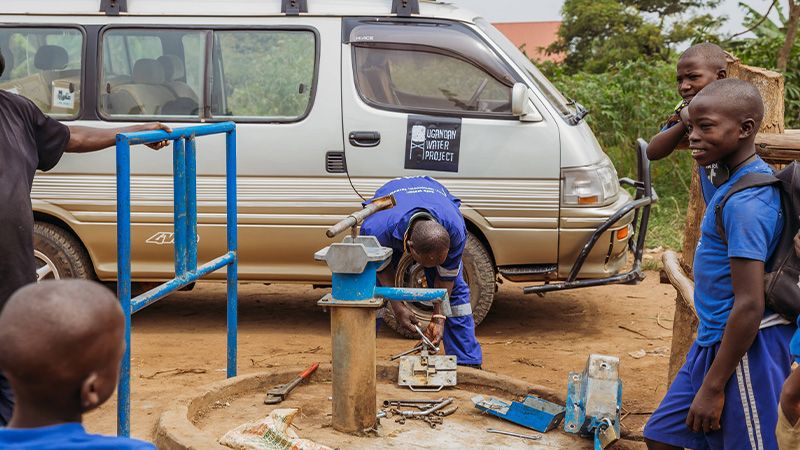
Another impactful way that we bring access to clean water is through borehole rehabilitation. Boreholes are deep wells fitted with hand pumps that can provide water to hundreds of people every day. Their key impact is in volume. One borehole can typically produce enough water to support an entire community.
But, over time, pumps wear out, parts fail, and many systems are left unrepaired because no one local has the training or resources to fix them.
That’s where the Ugandan Water Project comes in. When we identify a broken borehole, whether a community reaches out to us or our team discovers it during field visits, our Ugandan crew works alongside local community members to bring it back to life. We replace worn-out components, upgrade the hardware, install a new hand pump assembly, and thoroughly test the system to ensure it’s working reliably again.
But we don’t stop at repairs. Before we leave, we train local community members to care for and maintain the well, equipping them with the knowledge to handle routine maintenance and simple repairs. That means fewer breakdowns, faster fixes, and a water source that’s built to serve the community for years to come.
In Adyang Village, where more than 140 households rely on a single water source, that training, and a rehabilitated borehole, has made a life-changing difference.
“Our borehole used to break down frequently,” shared community member Akot Aaron. “It forced us to fetch water from a swamp that was smelly and muddy.” Today, he says, the borehole is “properly functioning and provides us with clean and safe water.” Now, over 700 community members have access to reliable water.
By restoring existing infrastructure instead of starting from scratch, we can return clean, reliable water to entire communities quickly, cost-effectively, and sustainably. For communities where no existing wells are nearby, we drill new boreholes, too, creating a safe, reliable water source that can serve hundreds of people for years to come.
AquaTrust - Sustaining Water Systems
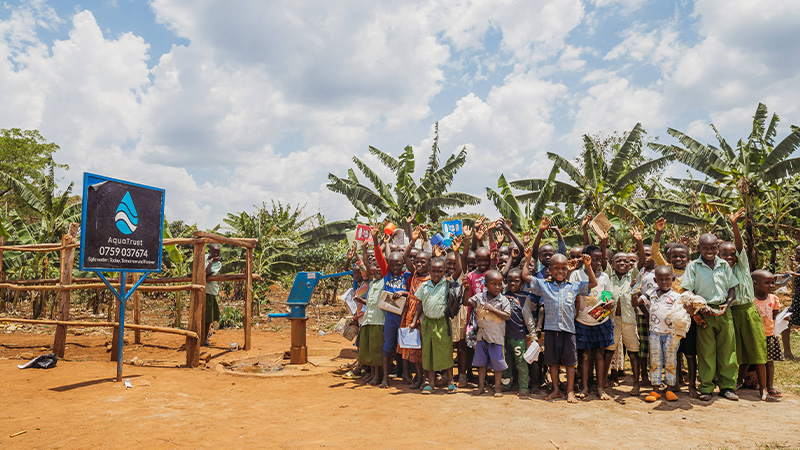
Building or repairing a water source is only the beginning. The real challenge is keeping it working for years to come.
That’s why Ugandan Water Project created AquaTrust, a first-of-its-kind borehole maintenance subscription service designed to prevent breakdowns before they happen, and fixing them quickly if they do. AquaTrust has grown from an idea on paper into a proven program that is expanding to new communities every month.
When a borehole breaks down, the impact is immediate. Families are often left to walk farther to collect water from another source or return to unsafe water from swamps and ponds. In many areas, repairs can take weeks or even months, leaving entire communities without reliable access to clean water. Even small mechanical issues can become major challenges when communities don’t have the tools, training or resources to address them.
AquaTrust changes that.
By enrolling in the program, communities invest in a proactive maintenance approach that keeps their borehole running year-round. Every community subscribed to AquaTrust receives:
- An initial borehole upgrade with new, high-quality components
- Quarterly preventative maintenance visits and comprehensive pump testing
- Guaranteed emergency response within 24 hours of a reported breakdown
- Annual replacement of worn parts to extend the life of the system
Instead of waiting for a breakdown, AquaTrust focuses on preventing one.
Today, a total of 359 communities are actively enrolled in AquaTrust, ensuring reliable access to clean water for more than 104,600 people. Every new community that joins the program represents another water source protected, another long walk avoided, and another family that can count on clean water when they need it most.
As AquaTrust continues to grow, so does its impact. We continue to expand the program to reach even more communities, helping ensure that every borehole remains a dependable source of clean water for generations to come.
RUMIS - Safe Water Forever
Imagine trying to solve a nationwide water crisis without knowing which wells are working, which ones are broken, or who still lacks access to clean water. For years, that’s been the reality in Uganda.
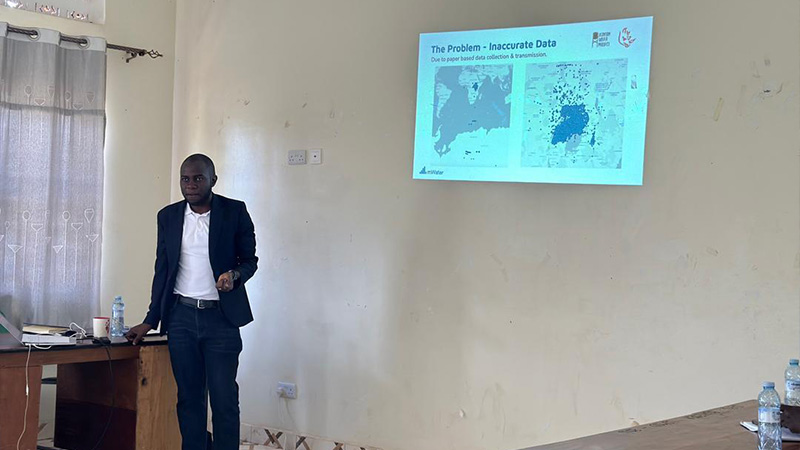
Much of the country’s water infrastructure has been managed through an outdated, paper-based system, making it difficult to track the condition of water sources or understand where help is needed most. Without accurate, up-to-date data, it’s nearly impossible to plan repairs, prioritize investments, or measure progress toward universal access to clean water.
Uganda needs a better way to collect, manage and analyze water data. RUMIS is helping make that possible. Ugandan Water Project has developed and piloted The Rural and Urban Management Information System, RUMIS, a national digital platform that brings water data from across the country together and up to date, all in one place.
Using smartphones in the field, government staff can collect and upload information instantly, making it immediately available through the cloud. This replaces slow, manual paperwork with real-time data, improving both the speed and accuracy of reporting. The result is a more reliable picture of the locations of water sources and systems, which are working, which need repairs, and where resources should be directed first.
The success of the pilot quickly demonstrated RUMIS’s potential. After onboarding eight districts into RUMIS, the Ugandan Ministry of Water and Environment invited UWP to expand RUMIS nationwide. Since this partnership was established, we have onboarded a total of 20 districts, and mapped 21,575 water points. But there’s still more work to be done. Around 120 more districts remain to get involved.
Ending Uganda’s water crisis isn’t just about building more wells or repairing existing ones. It’s about giving leaders the information they need to make smarter decisions, invest resources where they’ll have the greatest impact, and ensure every community has lasting access to safe water.